Insight Springs: A benchmark report experience
I built a unique, interactive B2B report — complete with music and SFX, animation, player controls, and other game-like features — that exceeded annual goals within mere weeks of launch.
Background
Everybody loves a good B2B report, right? Did I just hear you groan from across the internet? Don't worry. This one got un-boring-ified™ by yours truly.
Fullstory's 2025 benchmark report is based on 14 billion anonymized user sessions across desktop and mobile. It spotlights year-over-year behavioral trends and makes it easier to see where digital experiences are improving (or failing).
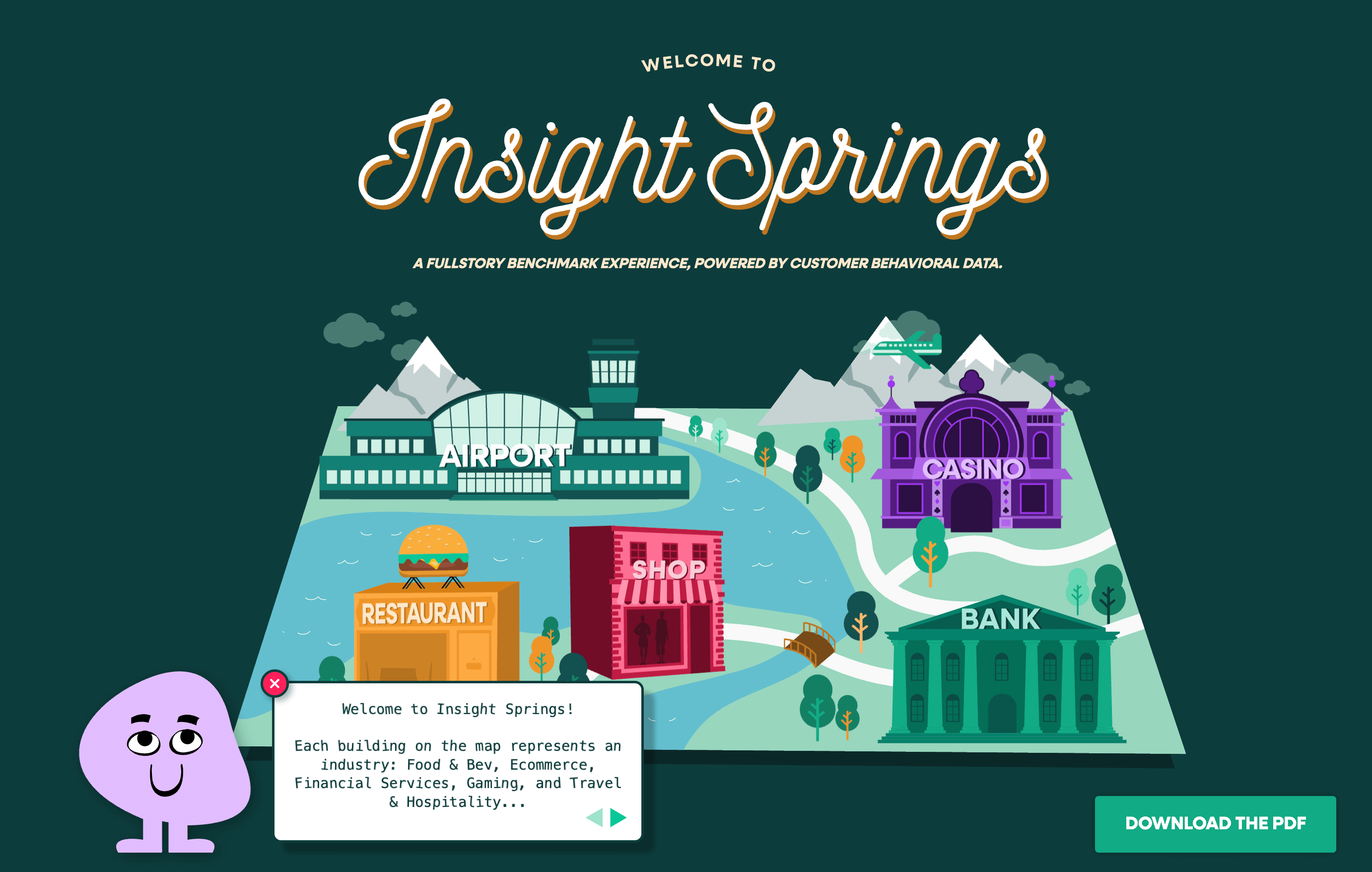
There are two ways to explore it. The web-based version, Insight Springs, is fast, visual, and engaging — a great way to quickly dig into the trends that matter most. (This is the part I worked on.) There's also a PDF download for people who want to dive into the details.
Process
Early creative direction drew from old-school, 8-bit games. Though we quickly abandoned that particular art style (pixel art takes a lot of time), I ran with the idea of creating a game-like experience.
Having made actual web-native video games in the past, I initially explored using Phaser or PixiJS to render the whole experience in an HTML canvas. But that approach had a few drawbacks, namely:
- Lack of accessibility. The canvas element is a black box for screen readers, and since the whole point of this report is to surface insights about digital experiences, that seemed... less than ideal.
- Clunky design-to-dev workflow. The illustrator was creating entire scenes in Figma that I'd have to recreate, pixel-for-pixel, inside the canvas. That felt inefficient and time-consuming.
- Increased bundle size. Adding a new package or two just for this one experience didn't seem worth it.
I was also just cautious of over-engineering this thing. Yes, we wanted the experience to feel like a game. But we weren't making a real game with player health, achievements, and so on.
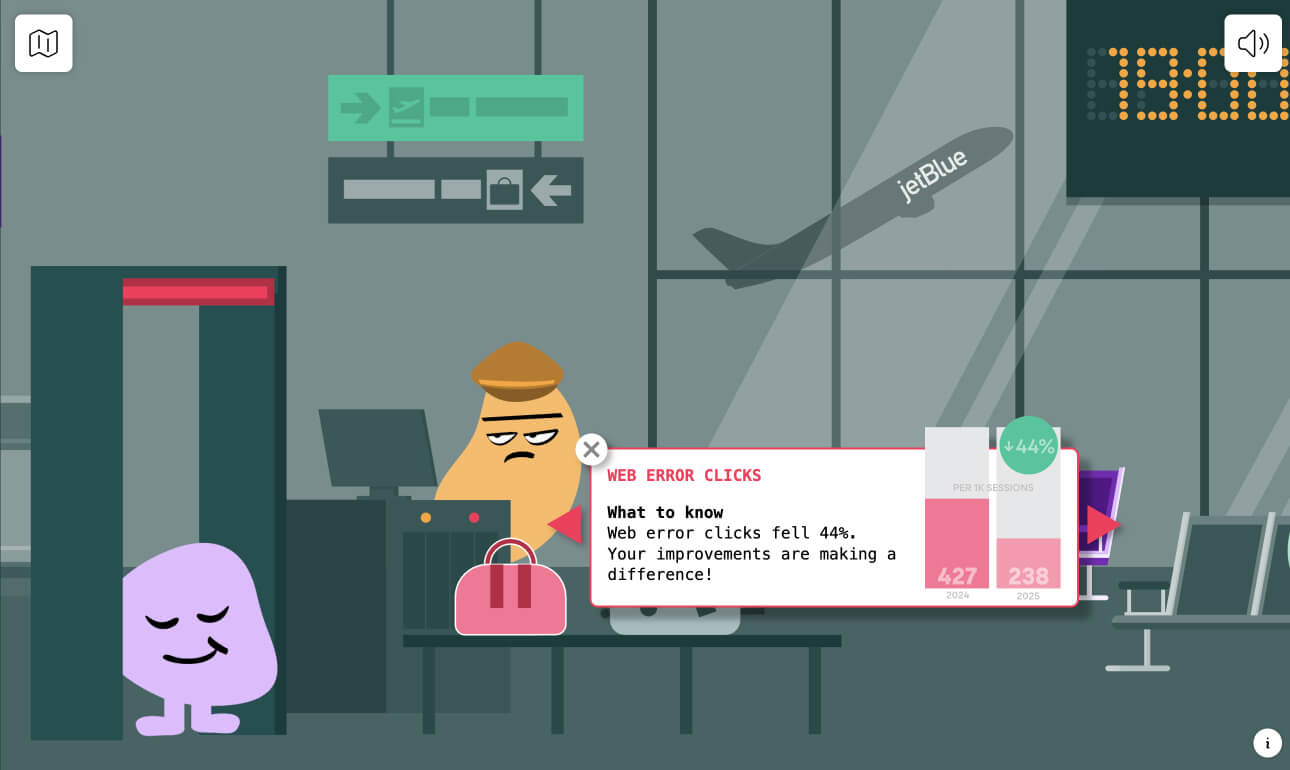
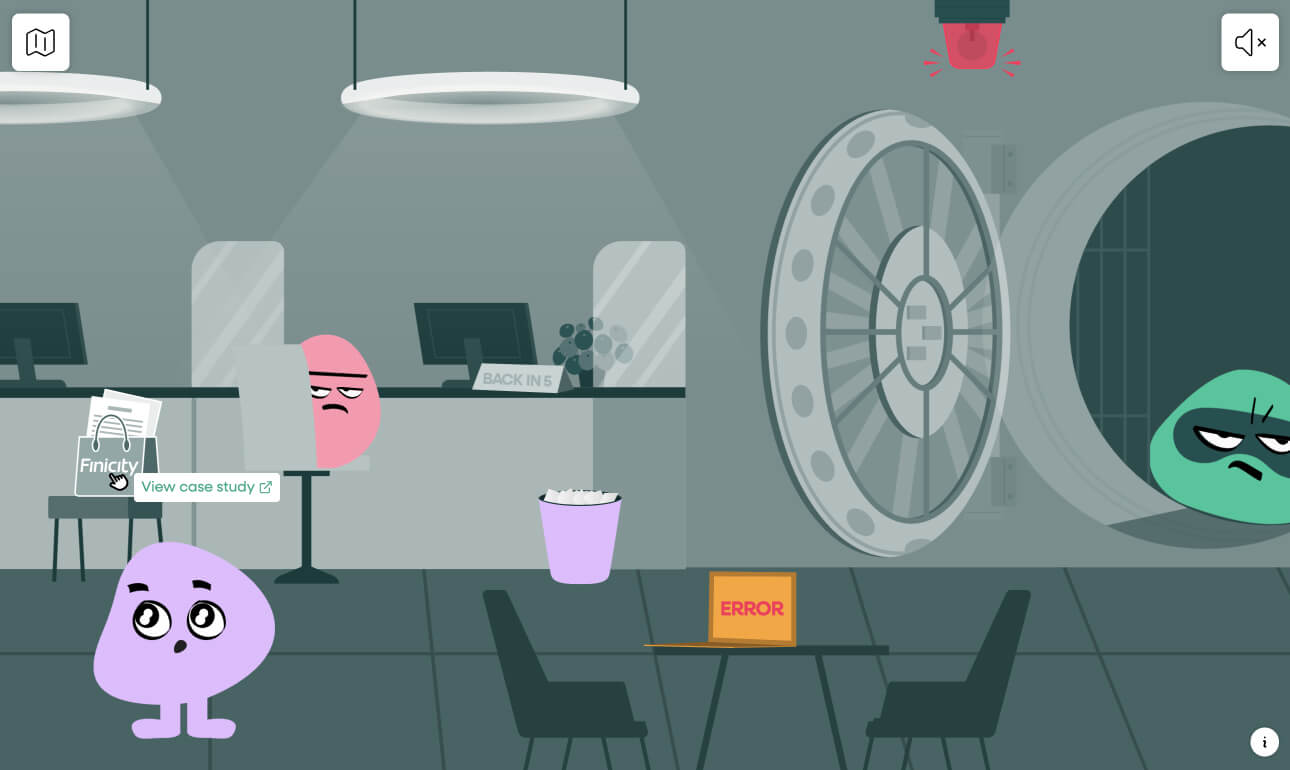
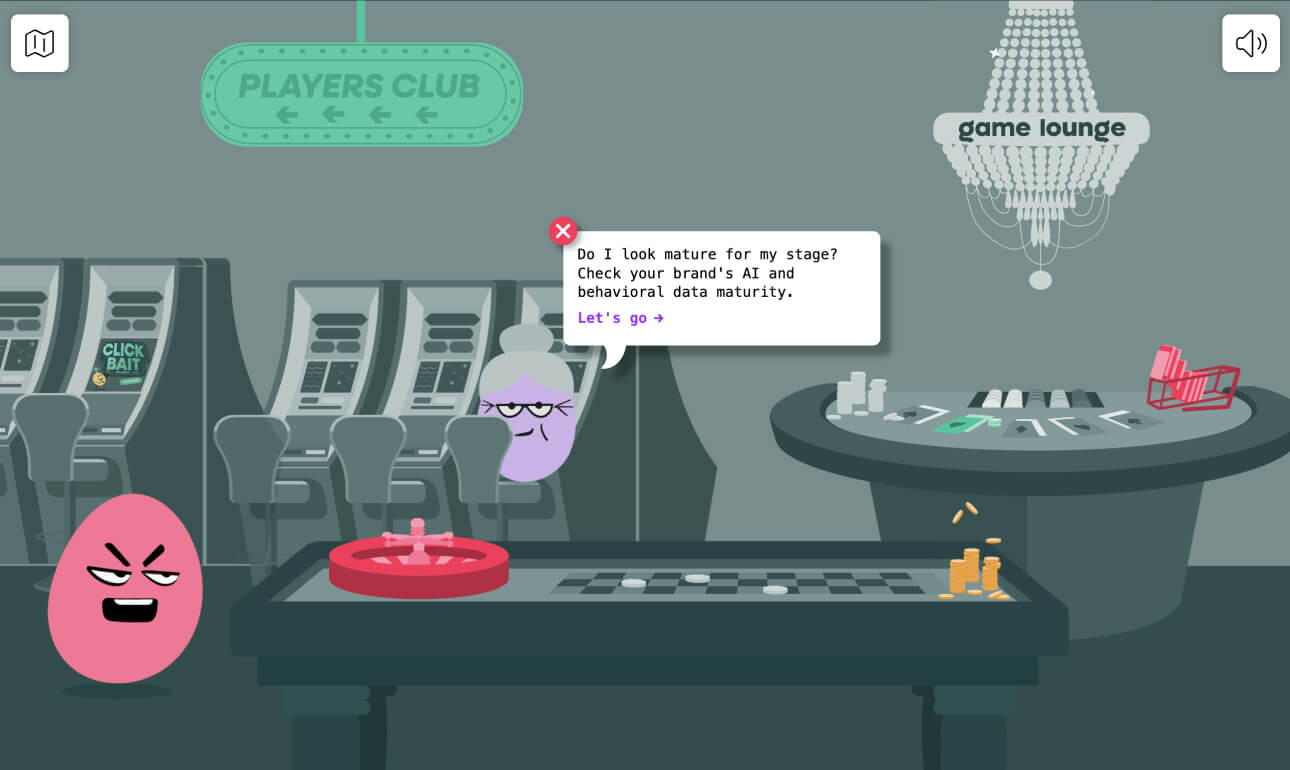
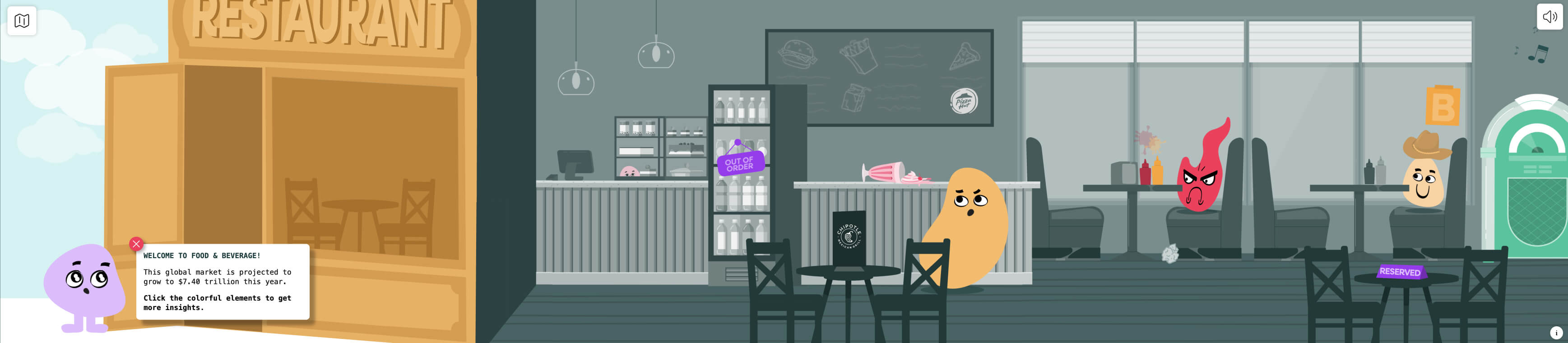
Ultimately, what I proposed and built was an SVG-based experience. The scenes and in-game elements, such as characters and props, were all SVGs that I manipulated with CSS and JavaScript. (Overlays that show the insights are standard DOM elements — ensuring maximum accessibility.)
"All this with SVG?!" you say? Why, yes. SVG is one of my favorite tools in the creative developer's toolkit. It's not new or flashy. But it's reliable, flexible, and easy to work with. After all, SVG uses a markup-based language, just like HTML. And, also like HTML, it's fully compatible with CSS and JavaScript.
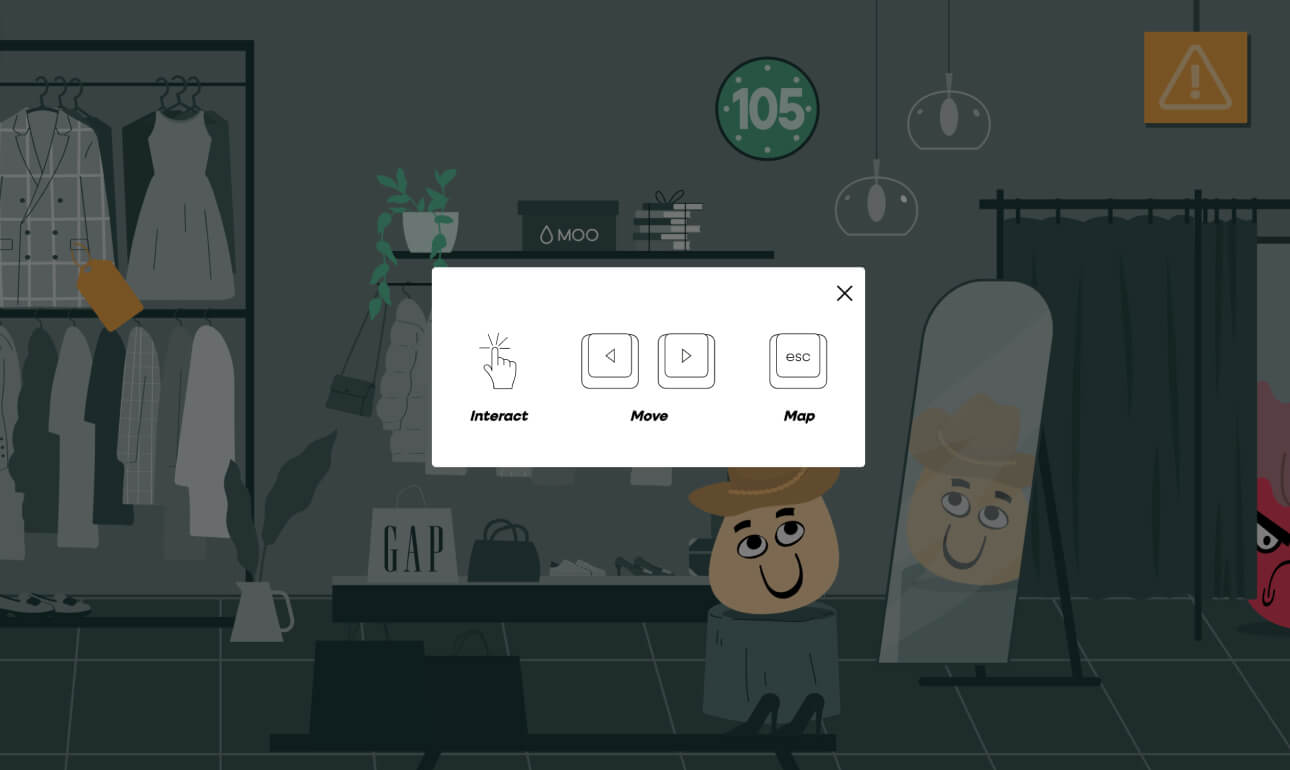
That's how I was able to quickly build core gameplay features, including keyboard controls for moving the player character, interaction-based motion and sound effects, and more.
Challenges
SVG is tremendously well-supported on the web. But there are a few gotchas when it comes to animating them consistently across browsers. Safari, in particular, is hard to work with. (I swear, Safari is the new Internet Explorer.) So, I had to spend a fair bit of time testing and adding Safari-specific tweaks.
Performance was also a concern. HTML canvas might not be accessible, but it certainly is more performant than SVG when it comes to animating lots of things. Ultimately, I just had to be conservative with the complexity of animations, and, in some cases, disable a few of them on (you guessed it) Safari.
All in all, I believe the tradeoffs of using SVG over Canvas were worth it in this project. But I do feel like I was pushing SVG to its limit.
Results
Within just a few weeks of launch, this experience generated 150% more leads than the previous year's PDF-based report — blowing past annual projections and goals.
Logan's superpowers are his creativity, problem-solving skills, and ability to execute quickly and flawlessly. He has an incredible talent for taking complex, abstract ideas and turning them into polished, engaging digital experiences. If there's ever a gap in knowledge, Logan doesn't get stuck—he figures it out. His adaptability, combined with his sharp creative instincts, makes him an invaluable resource for any team.

Oriana Lovera Kaufman
ACD, Lead Brand & Marketing Designer at Fullstory
